


The Sky’s the Limit: Benefits and Legal Rules for Real Estate Drone Photography in Australia
The Sky’s the Limit: Benefits and Legal Rules for Real Estate Drone Photography in Australia
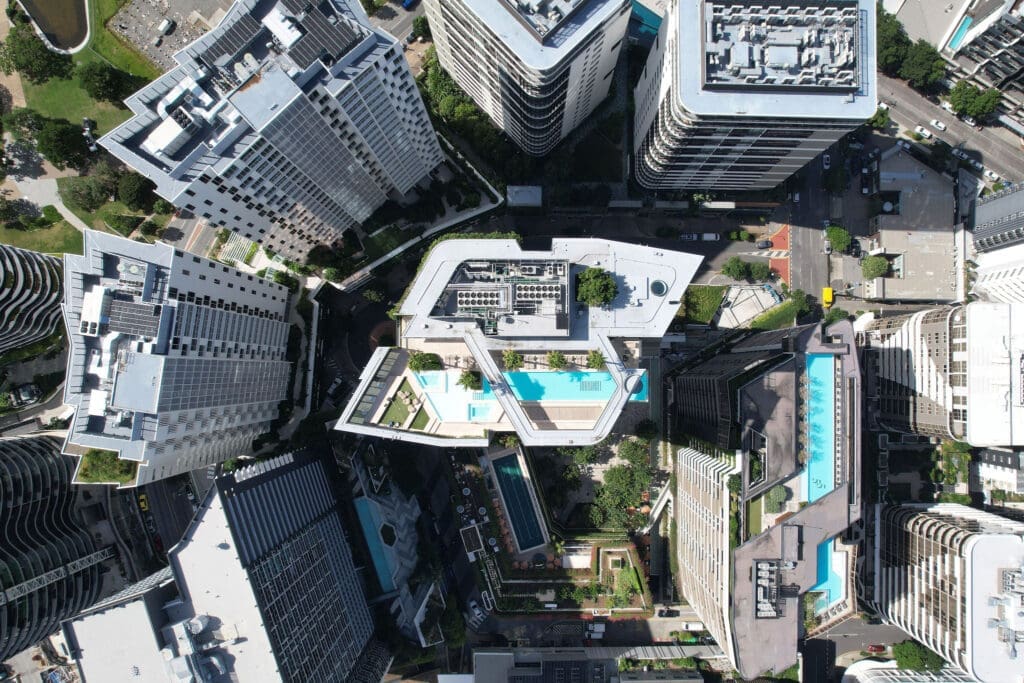
Drone photography has shifted from a luxury marketing gimmick to an absolute necessity in the Australian property market. Whether it is a sprawling rural estate in New South Wales or a beachside apartment block in Queensland, aerial media provides a perspective that ground-level photography simply cannot replicate.
However, taking to the skies comes with significant legal responsibilities. While drones offer massive marketing benefits, operating them commercially requires strict adherence to federal aviation laws and varied state-based privacy regulations.
Part 1: The Marketing Power of the Aerial View
Before looking at the legal boundaries, it is important to understand why drones have become a vital tool for premium listings. Aerial photography offers several distinct advantages:
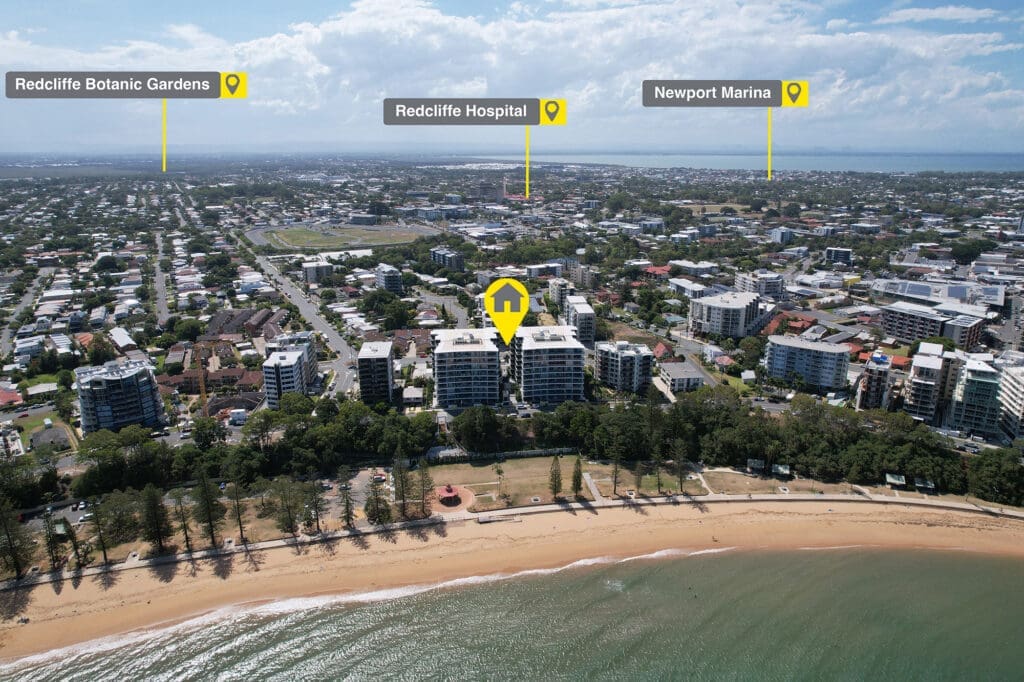
- Selling the Location, Not Just the House: Ground-level shots cannot capture proximity to local infrastructure. A drone shot can seamlessly show a home’s distance to the coastline, nearby parks, schools, or transport hubs in a single frame.
- Defining Property Boundaries: For acreage, rural listings, or large suburban blocks, aerial overlays allow agents to draw clear digital boundary lines. This gives buyers an immediate understanding of the land’s true scale and shape.
- Highlighting Architecture and Roof Quality: High-end architectural homes, extensive solar arrays, and complex roof designs are best viewed from above. Drones show off the full layout and design footprint of a property.
- Stopping the App Scroll: A striking aerial “Hero Shot” as the primary thumbnail on Realestate.com.au or Domain naturally stands out against standard street-front photos, driving higher click-through rates.
Part 2: The Federal Baseline (CASA Regulations)
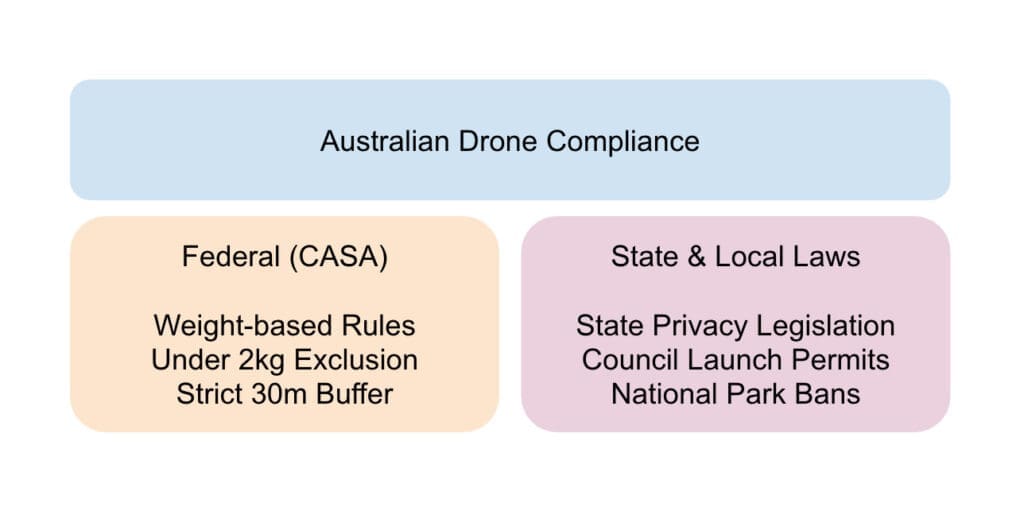
In Australia, airspace safety is governed at the federal level by the Civil Aviation Safety Authority (CASA). The moment a drone is used to take photos to market a property, it is classified as a commercial operation, not a recreational hobby.
The “Excluded Category” Rule (Under 2kg)
Most standard real estate drones (like the DJI Mavic or Phantom series) weigh under 2kg. If you or your photographer operate a drone in this weight class, you can fly under the “Excluded Category” without a full Remote Pilot Licence (RePL), provided you follow these rules:
- You must obtain an Aviation Reference Number (ARN) from CASA.
- You must register the drone with CASA before flying it commercially.
- You must strictly follow the standard operating conditions (e.g., flying only during the day, keeping the drone in your visual line of sight, and staying below 120 meters/400 feet).
The 30-Meter Rule
The biggest hurdle for real estate drone use is CASA’s strict rule regarding bystanders: you must not fly closer than 30 meters to people who are not directly involved in operating the drone. This means you cannot fly directly over neighbours, pedestrians, or busy suburban streets without breaching federal aviation law.
Part 3: State-by-State and Local Government Rules
While CASA controls the air, state governments and local councils control the land you launch from. Disregarding local state laws can result in heavy trespass, privacy, or environmental fines.
Queensland (QLD)
- Privacy and Nuisance: The Invasion of Privacy Act 1971 (QLD) makes it an offence to deliberately record people without consent where they have a reasonable expectation of privacy.
- Real Estate Application: If your drone accidentally captures a neighbour sunbathing or looking through their bathroom window, you risk severe privacy lawsuits. Always blur out neighbouring backyards and windows in post-production.
New South Wales (NSW)
- Surveillance Devices Act: Under the Surveillance Devices Act 2007 (NSW), using a drone to visually record private activities inside a home or fenced backyard without consent is illegal.
- National Parks Restrictions: NSW National Parks and Wildlife Service strictly bans the launching or landing of drones within National Parks without a commercial park permit. If your coastal or bushland listing borders a park, you cannot launch from within park boundaries.
Victoria (VIC)
- Council By-Laws: Many local councils across metropolitan Melbourne (such as the City of Melbourne and Bayside City Council) have specific by-laws prohibiting the launching of commercial drones from public parks, footpaths, or nature strips without a local permit. You must launch strictly from the vendor’s private property.
Western Australia (WA)
- Coastal and Marine Rules: WA listings frequently highlight beach proximity. However, the Department of Biodiversity, Conservation and Attractions (DBCA) enforces strict rules against flying drones close to marine mammals (like whales or dolphins) along the coast, which can frequently disrupt coastal property shoots.
Part 4: Best Practice Checklist for Real Estate Agents
To enjoy the marketing benefits of drones without the legal headaches, ensure your agency follows this simple compliance protocol:
- Hire Licensed Professionals: Always ensure your photography contractor holds a valid RePL (Remote Pilot Licence) and operates under a ReOC (Remote Operator’s Certificate) for complex suburban environments.
- Check Drone Registration: If shooting in-house, verify that your agency’s drone is officially registered with CASA and that the operator holds an ARN.
- Notify the Neighbours: As a courtesy and a legal safeguard, drop a note to immediate neighbours letting them know a drone will be operating around the property at a specific time.
- Audit the Final Imagery: Review all aerial photos and videos before publishing them online. Ensure adjacent properties are blurred, and no neighbours are visible in their private spaces.


